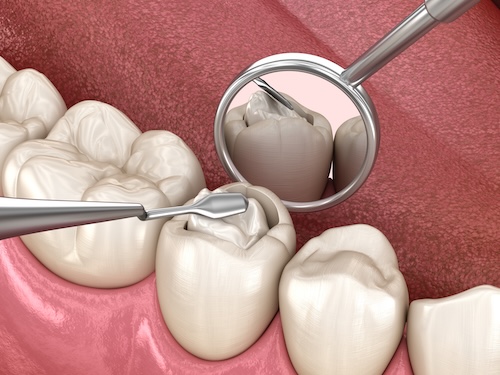
 At Carroll Family & Cosmetic Dentistry, we do everything we can to help your family's teeth stay strong, healthy, and cavity-free. We focus on prevention first.
How Does a Cavity Form?
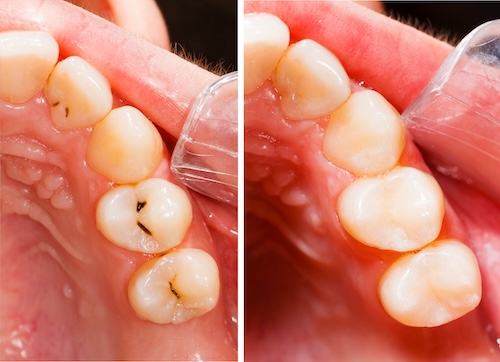 The process that causes a cavity to develop starts with plaque, a sticky film of bacteria that forms on teeth after eating. When you eat sugary or starchy foods, the bacteria in plaque produce acids. Those acids attack the outer enamel layer of your tooth.
The result is demineralization, meaning the acid is removing minerals from the enamel and weakening it. Eventually, the enamel breaks down and a small hole forms. That hole is a cavity.
If you don't have the tooth treated with a filling, the decay moves deeper. It can reach the softer layer under the enamel, called dentin. At this point, the tooth may become sensitive to hot, cold, or sweet foods. If the decay continues into the center of the tooth, where the nerve is, it can cause significant pain and may require more complex treatment to resolve.